
As Australian businesses enter 2024, workplace safety continues to be a pivotal concern, particularly for small and medium-sized enterprises (SMEs). Staying informed about emerging trends in workplace safety is crucial for maintaining compliance, enhancing employee well-being, and ensuring a productive work environment.
In this blog, we explore key trends that Australian SMEs should monitor in 2024 to stay ahead in the ever-evolving landscape of workplace safety.
Trend 1: Digital Transformation in Safety Management
The ongoing digital revolution is significantly impacting workplace safety practices. Technologies such as Artificial Intelligence (AI), the Internet of Things (IoT), and Big Data analytics are increasingly being integrated into safety management systems, enabling businesses to predict and mitigate risks more effectively.
1. AI and Predictive Analytics:
AI is being used to analyse large volumes of safety data, helping businesses to identify potential hazards before they occur. This predictive capability allows for proactive risk management, hazard identification and early intervention, reducing the likelihood of workplace incidents and improving safety measures.
2. IoT for Real-Time Monitoring:
A recent Commonwealth Bank of Australia (CBA) and YouGov study reveals that 59% of Australian SMEs are embracing AI, with 25% having already invested and 34% planning to within the next five years. Notably, younger generations are leading the charge, with 75% of Gen Z and Millennial business leaders expressing interest, showcasing AI’s growing importance for future business success.
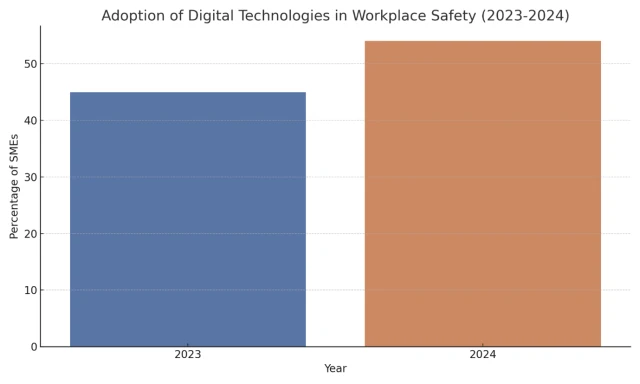
Chart: Adoption of Digital Technologies in Workplace Safety (2023-2024)
IoT devices enable real-time monitoring of workplace environments and data collection through interconnected devices and sensors, providing instant alerts when unsafe conditions are detected. This real-time data helps in quick decision-making and enhances overall safety standards.
Strategically deployed smart sensors create a vigilant network monitoring crucial safety factors like temperature, air quality, noise levels, and equipment health. This real-time data stream empowers immediate action in high-risk settings like manufacturing or construction, ensuring worker safety through swift intervention when conditions deviate from accepted standards.
Similarly, in agriculture, IoT-driven sensors monitor airborne chemical levels, protecting workers from the dangers of exposure to pesticides and other harmful substances.
3. Wearable Tech
With the Australian Work Health and Safety Strategy 2023-2033, Safe Work Australia aims to reduce worker fatalities caused by traumatic injuries by 30%. Previously, Safe Work Australia’s 2020-21 report revealed a concerning trend: 40% of serious workplace injuries resulted in joint, ligament, muscle, or tendon damage. Moreover, the median time off work for these injuries has skyrocketed by 67% since 2001, now reaching a staggering seven weeks.
Hence, wearable sensors can help reduce workplace injuries and fatalities
Wearable tech, equipped with sensors, is revolutionising worker safety by providing real-time health and safety monitoring. These devices can identify hazardous conditions, track vital signs, and alert workers to potential risks, significantly reducing accidents and injuries.
In sectors heavily influenced by environmental conditions, IoT technology is proving to be invaluable. For example, in mining, smart sensors integrated into helmets provide miners with real-time alerts about hazardous gases, empowering them to take immediate action and avoid potentially life-threatening situations.
4. Augmented and Virtual reality (AR/VR)
Augmented and virtual reality (AR/VR) offers immersive safety training experiences, simulating real-world hazards in a controlled environment. BIM further enhances AR/VR training, providing detailed models for realistic simulations.
5. Robotics and Automation
Robotics and automation continue to take on dangerous tasks, minimising human exposure to high-risk environments. This shift reduces human error and enhances worker safety. This innovation if utilised by SMEs can prevent significant injuries and accidents, amounting to safer workplaces.
6. Innovation in Material Science
Innovations in materials science have led to advanced protective gear and smart fabrics, providing enhanced safety and comfort. These materials offer superior protection from extreme temperatures and hazardous substances, even detecting and alerting users to potential threats.
Trend 2: Emphasis on Mental Health and Wellbeing
In 2024, there is a growing emphasis on mental health and well-being as integral components of workplace safety. Australian SMEs are increasingly recognising the importance of creating supportive work environments that address mental health issues.
1. Mental Health Initiatives:
More businesses are implementing mental health programs that provide resources and support for employees dealing with mental health challenges. These initiatives are not only about compliance but also about fostering a positive workplace culture.
Data from Beyond Blue shows that 1 in 5 Australian employees experiences a mental health condition each year, highlighting the importance of mental health initiatives in the workplace.
Economic Impact:
The Australian Productivity Commission estimates that mental health issues cost Australian businesses up to $17 billion annually in lost productivity.
2. Wellbeing Programs:
Companies are also focusing on overall employee well-being by introducing flexible working arrangements, promoting work-life balance, and offering wellness programs that help reduce stress and improve mental health.
ISO 45003 and Psychosocial Risk Assessments for SMEs
In Australia’s dynamic business landscape, the well-being of employees is more critical than ever.
The spotlight is now firmly on psychosocial risks, and ISO 45003 has emerged as a guiding light for SMEs to navigate this crucial aspect of workplace safety.
It’s no secret that mental health challenges impact businesses of all sizes, but SMEs often lack the resources or expertise to address them effectively. With ISO 45003, SMEs now have a framework to proactively identify, assess, and manage psychosocial hazards, fostering a mentally healthy work environment.
By implementing this standard, Australian SMEs can reap numerous benefits:
Reduced absenteeism and presenteeism:
A focus on mental health can decrease sick days and improve overall employee productivity.
Enhanced employee engagement:
A supportive work environment promotes a sense of belonging and commitment.
Improved reputation and talent attraction:
Demonstrating a commitment to employee well-being can be a powerful differentiator in the competitive talent market.
Legal compliance:
Proactively addressing psychosocial risks helps SMEs meet their obligations under Australian WHS laws.
By prioritising mental well-being, Australian SMEs can build a resilient and successful future.
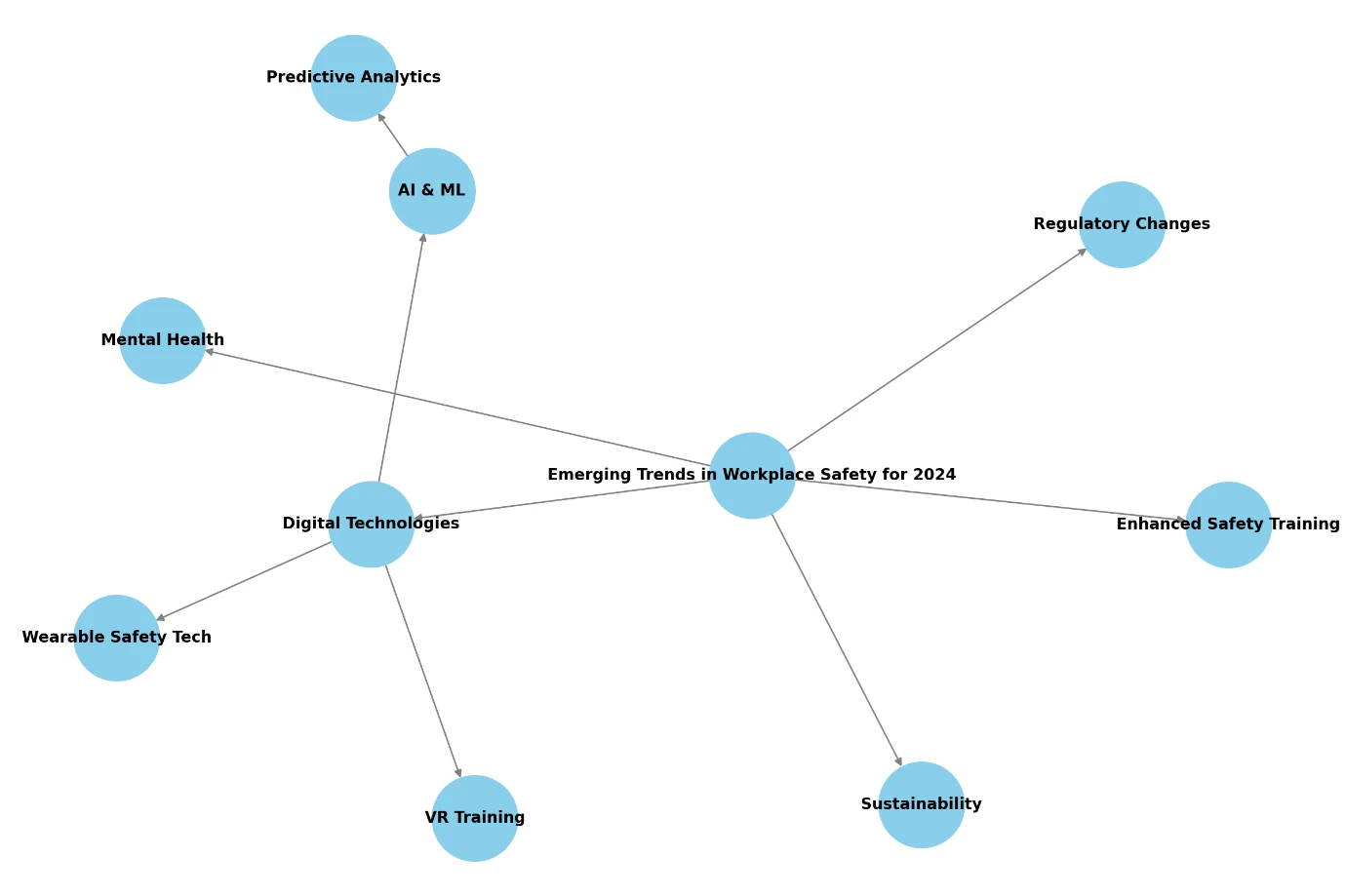
Mind Map: Components of a Workplace Mental Health Program
Trend 3: Strengthening Compliance with Updated Regulations
Staying compliant with the evolving Work Health and Safety (WHS) regulations remains a top priority for Australian SMEs. The Australian government continues to update these regulations to ensure safer work environments.
Updated WHS Regulations:
Recent updates to WHS regulations include stricter penalties for non-compliance and enhanced requirements for hazard identification and risk management. These changes necessitate that SMEs regularly review and update their safety practices to remain compliant.
Recent Developments in Work Health and Safety Law
Harmonisation of WHS Laws:
The Australian Government aims to achieve greater consistency in WHS laws across jurisdictions by introducing a model WHS Act and Regulations. This is in response to the current patchwork of laws, which can create confusion and compliance challenges for businesses operating across state borders. The new model legislation will introduce key changes such as a broader definition of ‘workplace’ and a focus on psychosocial risks.
Increased Penalties for WHS Offenses:
Significant increases in WHS penalties across Australia have been implemented, highlighting the seriousness of breaches. These penalties apply to individuals, corporations, and officers, aiming to deter non-compliance and promote a stronger safety culture.
Prosecutions for Industrial Manslaughter:
Industrial manslaughter laws have been introduced in various Australian jurisdictions, holding individuals and corporations accountable for workplace deaths resulting from negligence. These laws send a strong message about the importance of prioritizing safety and carry severe penalties, including imprisonment.
Review of the Model WHS Act:
Safe Work Australia is conducting a review of the model WHS Act to ensure it remains current and addresses emerging workplace challenges. The review focuses on key areas such as officer due diligence, the role of health and safety representatives, and psychosocial hazards. The outcomes of this review will inform future amendments to the model legislation and influence WHS laws across Australia.
Increased Enforcement Activity:
Regulatory bodies are intensifying their enforcement efforts, including conducting more inspections and audits. This proactive approach aims to identify and address safety breaches, ensuring that businesses comply with WHS regulations and prioritise worker well-being.
Compliance Focus:
SMEs must prioritise understanding these regulatory changes and ensuring that their internal processes align with the latest requirements. This not only prevents legal repercussions but also promotes a safer work environment.
Trend 4: Increased Focus on Ergonomics
Ergonomics is increasingly recognised as a critical aspect of workplace safety, particularly in industries involving repetitive tasks or prolonged periods of sitting, such as in office environments.
Preventing Ergonomic Injuries:
Poor ergonomic practices can lead to musculoskeletal disorders and other workplace injuries. To mitigate these risks, businesses are investing in ergonomic assessments and equipment, such as adjustable workstations and ergonomic chairs.
Ergonomics Training:
SMEs are also implementing training programs that educate employees on the importance of good ergonomics and proper posture, helping to reduce the incidence of ergonomic-related injuries.
Trend 5: Adoption of ISO 45001 Standards
ISO 45001, the international standard for occupational health and safety management systems, continues to gain traction among Australian SMEs. This standard provides a framework for improving employee safety, reducing workplace risks, and creating safer working conditions.
- ISO 45001 Certification: More Australian SMEs are pursuing ISO 45001 certification as a way to demonstrate their commitment to workplace safety. This certification not only helps in compliance but also boosts the company’s reputation among clients and partners.
- Benefits of Certification: Businesses that have adopted ISO 45001 standards report improvements in safety culture, reduced workplace incidents, and enhanced employee satisfaction.
ISO 45001:2024
ISO 45001:2024 is a game-changer for Australian SMEs, offering a structured framework to proactively manage workplace health and safety. With its emphasis on leadership, worker participation, and risk-based thinking, the updated standard empowers SMEs to create safer and healthier work environments, reduce incidents, enhance productivity, and cultivate a positive safety culture. Embracing ISO 45001:2024 not only ensures compliance but also positions SMEs for sustainable growth and success in the dynamic Australian market.
Trend 6: Sustainability and Resilience
The push for sustainability and resilience isn’t just a trend for large corporations; it’s a critical factor for the survival and success of Australian SMEs. As environmental and social pressures mount, businesses of all sizes must step up and minimise their negative impact while preparing for the unexpected.
For SMEs, this means embracing practices like adopting renewable energy, minimising waste, and diversifying supply chains. But it’s not just about the planet – sustainability and resilience directly affect workplace safety. Climate change, for instance, can lead to extreme weather events that create new hazards for workers.
By proactively addressing sustainability and resilience, SMEs can:
- Safeguard their workforce: Protect employees from evolving risks, boosting morale and productivity.
- Ensure business continuity: Be prepared to weather disruptions and recover swiftly.
- Enhance their reputation: Attract customers and investors who value responsible practices.
- Save costs: Reduce energy consumption, waste disposal fees, and potential liabilities from environmental damage.
While these trends seem promising and are being adopted by various SMEs, the challenges lie in skills, financial constraints and a risk-taking ability that has kept many small to medium businesses away from embracing the new trends. However, with the right guidance, financial and professional assistance, and the zeal to invest to revolutionise their business, etc., can change the face of workplace health and safety for SMEs in Australia.
For more information on how we can help your business stay ahead of workplace safety trends, visit our HSE landing page.


Recent Comments