
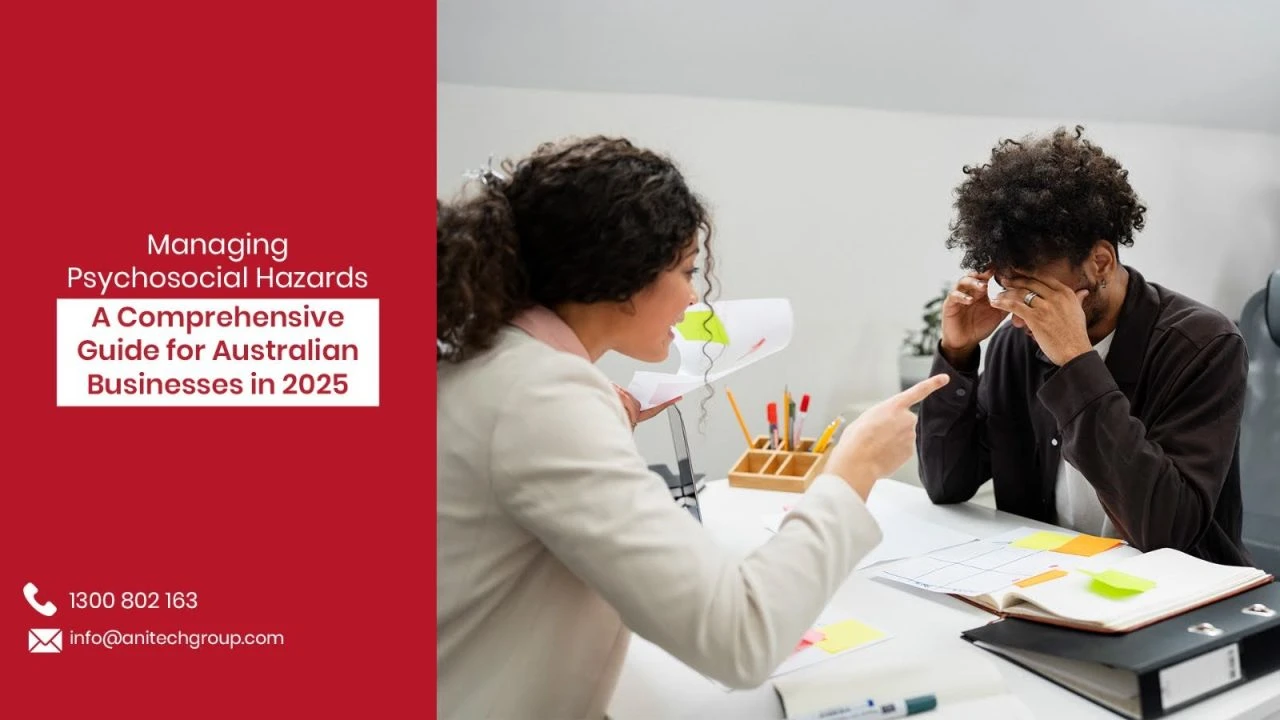
In 2025, managing psychosocial hazards in the workplace will become a legal requirement for businesses (PCBUs). The Australian work health and safety (WHS) laws have formally recognised mental health risks as workplace hazards along with physical dangers. Under these changes, employers must now identify and control psychosocial hazards through structured processes and transparent leadership.
These changes are the result of mounting evidence that poor mental health at work has negative effects on company performance, productivity, and culture in addition to harming individuals. Following these new rules is now a basic component of corporate responsibility for directors, HR directors, and WHS officers.
Businesses of all sizes are embedding psychosocial risk management into their safety systems to meet obligations while building healthier, more resilient teams. Here in this guide, we have shared the updated rules and how your business can align with them.
What Are Psychosocial Hazards?
Psychosocial hazards are factors at work that can cause psychological harm, emotional distress, or even physical injury. Unlike a wet floor or a malfunctioning machine, these risks are often invisible, but their impact can be just as serious as physical ones.
According to Safe Work Australia, examples of workplace psychosocial hazards include:
- High workloads or unrealistic time pressures
- Ongoing conflict between staff or teams
- Inadequate support from supervisors or management
- Bullying, harassment, or exposure to distressing content
- Low job control or unclear work roles
- Isolation, particularly in remote or hybrid work environments
When left unmanaged, these risks can result in anxiety, depression, burnout, absenteeism, and compensation claims. That is directed to reduce employee well-being and business performance.
What’s Changed in 2025?
In recent years, WHS regulations across Australia have evolved to include explicit obligations for managing psychosocial hazards. As of 2025, most jurisdictions, including NSW, QLD, VIC, WA, and the ACT, have enforced these requirements through their state-based legislation.
The Model Work Health and Safety Regulations, as supported by Safe Work Australia, require businesses (PCBUs) to:
- Identify psychosocial hazards in the workplace
- Assess associated risks (considering severity, frequency, and likelihood of harm)
- Implement control measures that eliminate or reduce harm
- Review those measures regularly to ensure they remain effective
Non-compliance can now trigger investigations, improvement notices, or even prosecution under WHS law. Regulators will expect businesses (PCBUs) to treat mental health risks with the same diligence applied to physical safety.
Why It Matters to Employers
If your organisation fails to manage psychosocial risks, it can harm both your workforce and your business. Your organisation is not only affected by legal consequences, but it has more than that:
- Increased staff turnover
- Higher sick leave and compensation claims
- Drop in morale, trust, and productivity
- Damage to brand reputation or tender eligibility
Nowadays, employees value well-being rather than a better salary. Creating a safe, respectful, and psychologically healthy environment is now a minimum expectation, not a bonus feature.
Leaders who invest in workplace mental health position themselves to retain top talent, build a strong culture, and meet public and legal standards. In contrast, businesses (PCBUs) that overlook these changes may find themselves lagging behind both socially and operationally.
How to Manage Psychosocial Hazards: A Step-by-Step Approach
Workplace psychosocial hazards must be managed using the same four-stage risk management process as physical risks:
1. Identify Hazards
Use tools such as staff surveys, interviews, performance data, and exit feedback to pinpoint areas of concern. Look for patterns related to workload, conflict, or lack of support.
2. Assess the Risks
Determine the likelihood and potential severity of harm. Consider how long employees are exposed to the hazard and whether it combines with other risks (e.g., isolation + workload).
3. Implement Control Measures
Apply the hierarchy of controls:
- Eliminate the hazard where possible (e.g., remove harmful practices)
- Minimise exposure (e.g., review role clarity, implement flexible rostering)
- Introduce systems to support early intervention and employee assistance
4. Review and Monitor
Measure outcomes through regular reviews, audits, or feedback loops. Adjust strategies if issues persist or new risks emerge. This isn’t a one-time task; it’s an ongoing, responsive responsibility.
How Anitech Supports Psychosocial Risk Compliance
At Anitech, we understand that mental health is a strategic objective rather than just a compliance responsibility. We help businesses meet psychosocial WHS duties through tailored services including:
- Workplace assessments and hazard mapping
- Custom risk management plans aligned to WHS legislation
- Policy updates to include psychosocial controls
- Leadership training on respectful management and risk reporting
- Support in audits and regulator engagement
We ensure your business doesn’t just comply with those compliances but leads with integrity, care, and clarity.
A Safer, Stronger Workplace Starts With Mental Health
By 2025, adherence to psychosocial risks in Australian laws is not optional anymore; it is essential to a company’s viability, credibility, and sustainability.
The workplace of today is as much about emotional and mental well-being as it is about physical safety. And the businesses (PCBUs) that act now thoughtfully, practically, and professionally are the ones that will attract talent, improve performance, and reduce risk.
If you’re a national enterprise or a growing SME, Anitech is ready to support your journey towards a safer, more resilient workplace. Need help strengthening your psychosocial risk management plan? Contact Anitech today for practical, tailored support.


Recent Comments