
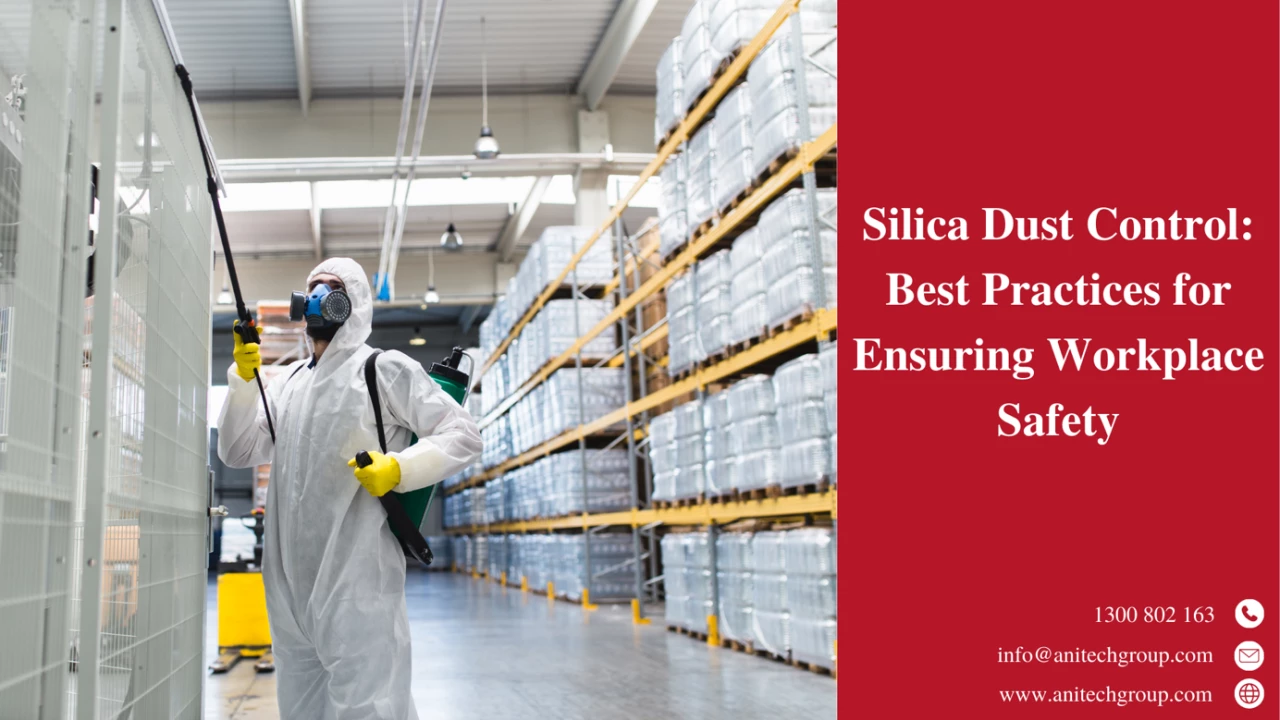
Silica dust is a hazardous material that can cause serious health problems if not properly controlled in the workplace. Inhalation of this fine particulate matter can lead to serious respiratory conditions, including silicosis and lung cancer. To ensure workplace safety, it is crucial to implement effective silica dust control measures. In this blog, we will explore best practices on Silica Dust Control and protecting the well-being of workers.
Safe Work Australia’s Workplace Exposure Standards (WES) on Silica Dust Control
Safe Work Australia is an Australian government agency that focuses on improving workplace health and safety. It designs Workplace Exposure Standards (WES) on Silica Dust Control for ensuring workplace safety from the harmful effects of silica dust exposure.
Silica dust is a common byproduct of many industrial processes, such as construction, mining, and manufacturing. When inhaled, it can cause serious respiratory problems, including silicosis, lung cancer, and chronic obstructive pulmonary disease (COPD).
To mitigate the risk of silica dust exposure, employers can follow Safe Work Australia’s WES guidelines,
1. Understanding the hazards of silica dust and implementing risk management strategies: Employers should assess the risks associated with activities that involve silica dust and implement control measures to minimise exposure.
2. Using effective control measures: Employers can use measures such as water suppression, ventilation systems, and personal protective equipment (PPE) to minimise the spread of silica dust.
3. Training workers on the risks associated with silica dust: Workers should be trained on the risks associated with exposure to silica dust and how to use control measures to reduce their exposure.
4. Monitoring and reviewing control measures: Employers should regularly monitor and review the effectiveness of control measures to ensure they are working as intended.
Employers are responsible for implementing these control measures to ensure the health and safety of their workers. Failure to comply with Safe Work Australia’s standards and guidelines can result in penalties and legal actions.
Best Practices for Silica Dust Control: Engineering Controls
Engineering controls are measures that are designed to reduce or eliminate silica dust at the source. These controls are the most effective way to prevent silica dust exposure in the workplace. Examples of engineering controls include:
1. Wet cutting-edge Methods
Using water to control dust during cutting, drilling, or grinding operations is an effective way to reduce silica dust levels. One can use wet methods to apply water to many different types of materials, including concrete and masonry, using a hose, a sprayer, or a wetting agent.
2. Local Exhaust Ventilation (LEV)
The local exhaust ventilation system captures dust at the source and removes it before workers can breathe it in. It is capable of being used for a variety of operations such as cutting, drilling, and grinding. The system comprises a hood, ductwork, and a fan.
3. Dust Collection Systems
A dust collection system is a device that captures dust and debris from the air and stores it in a container. It can be used for a variety of operations, including sanding, cutting, and grinding. The system consists of a vacuum or blower, a filter, and a container.
4. Enclosure
Enclose machinery and equipment producing silica dust within sealed cabinets or enclosures. This prevents the escape of dust into the work environment and reduces worker exposure.
5. Using sacrificial backer-boards or spoil boards:
By placing backer-boards or spoil boards behind the material while cutting or drilling, the amount of dust in the air can be minimized. This helps to reduce the risk of workers being exposed to silica dust.
6. Cleaning up dust with an M or H-class industrial vacuum cleaner:
To ensure the safe collection and containment of silica dust, it is recommended that employers use specialized industrial vacuum cleaners designed for hazardous dust, such as M or H-class vacuum cleaners. These vacuum cleaners incorporate high-efficiency filters that actively capture small particles and prevent their release during the cleaning process.
Administrative Controls
Control Measures designed to reduce silica dust exposure through changes in work practices or policies are administrative controls. These controls are less effective than engineering controls, but they can be useful in situations where engineering controls are not feasible or practical. Examples of administrative controls include:
Planning cutting tasks: Planning cutting tasks to minimise the number of cuts required. This helps reduce overall exposure to silica dust by reducing the amount of cutting, grinding, or drilling needed.
Written rules and policies: Implementing written rules and policies for working with silica or cleaning silica waste. This includes having a documented clean-up procedure and log to ensure consistent and safe handling of silica dust.
Maintenance schedule and log: Establishing a maintenance schedule and log for equipment and personal protective equipment (PPE). Regular maintenance and inspection of equipment and PPE help ensure they are in proper working condition and provide effective protection against silica dust exposure.
Limiting Exposure Time: One way to reduce silica dust exposure is to limit the amount of time that workers spend performing tasks that generate silica dust. Employers should schedule work tasks to expose workers to silica dust for shorter periods.
Restricted area policy: To reduce silica exposure, organizations should actively restrict access to areas where silica dust is generated, allowing only authorized personnel to enter. Implementing restricted area policies is crucial to effectively limit access to these hazardous areas.
Personal Protective Equipment (PPE): PPE is the last line of defense against silica dust exposure.Employers must actively provide workers with appropriate PPE, such as respirators, goggles, and gloves, when they cannot control silica dust levels below the permissible limit.
Personal Protective Equipment (PPE) for Silica Dust Control
PPE is the last line of defence against Silica Dust Control for Workplace Safety. Employers must provide workers with appropriate PPE, such as respirators, goggles, and gloves when engineering and administrative controls are not enough to keep silica dust levels below the permissible exposure limit.
Respirators
Respirators are the most common type of PPE used to protect workers from silica dust exposure. There are two main types of respirators: air-purifying respirators (APRs) and powered air-purifying respirators (PAPRs). APRs use filters to remove particles from the air, while PAPRs use a battery-powered blower to force air through a filter.
Goggles and Face Shields
Workers should wear goggles and face shields to protect their eyes from silica dust whenever they are performing tasks that generate silica dust.
Gloves & eye protection
Providing suitable PPE, including gloves and eye protection, reduces workers’ exposure to silica dust. It is crucial for workers to wear this PPE while handling silica-containing materials to protect their hands and eyes from dust exposure.
Workplace Training and Education for Silica Dust Control
Workplace training and education are critical components of an effective silica dust control program. Properly training workers on the hazards of silica dust exposure and the correct utilization of engineering controls, administrative controls, and personal protective equipment is essential for effective silica dust control in the workplace. Employers must provide workers with the training they need to protect themselves from silica dust exposure.
Proper training should cover health risks, proper usage of controls (engineering and administrative), and appropriate use of personal protective equipment (PPE) for silica dust exposure.In addition, workers should receive training on the appropriate handling and disposal of materials containing silica dust.
By providing workers with proper training, employers can ensure that they are taking the necessary steps to protect their workers from silica dust exposure.
Monitoring and Maintenance of Silica Dust Control
Employers must monitor silica dust levels regularly to ensure effective control measures. Regular maintenance and inspections of engineering controls, like LEV systems and dust collection systems, are also crucial. By testing the air and identifying high-exposure areas, employers can take steps to reduce silica dust exposure. Employers can also ensure that their silica dust control strategies are working effectively.
So, effectively controlling silica dust exposure is a crucial aspect of ensuring workplace safety and protecting the health of workers. By implementing best practices, organizations can mitigate silica dust risks, prioritize worker well-being, and foster a safer work environment. Let’s commit to embracing these control measures to prevent devastating consequences.


Recent Comments