
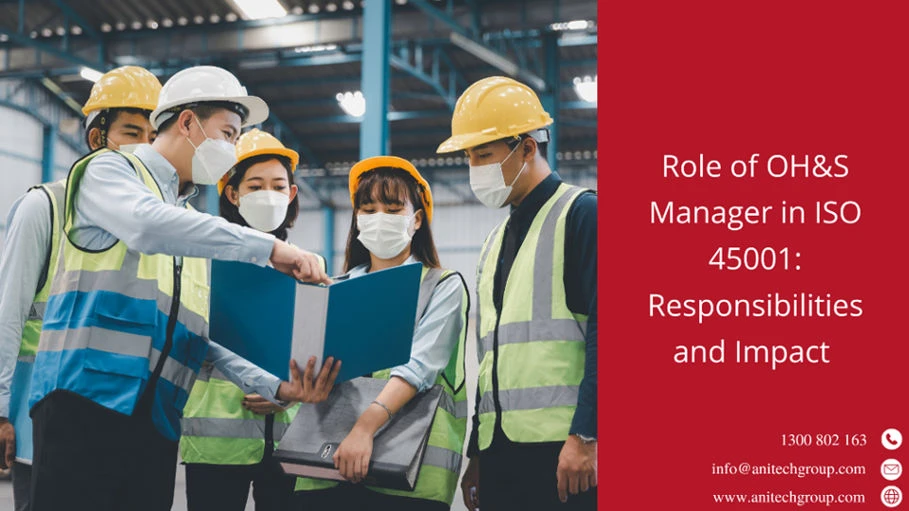
Workplace safety is an indispensable priority for any organisation. Ensuring the well-being of employees not only fosters a healthy and productive work environment but also aligns with legal and ethical responsibilities. In this context, the role of an Occupational Health and Safety (OH&S) Manager becomes pivotal.
The OH&S Manager is the driving force behind an organisation’s OH&S management system, and they are responsible for orchestrating the measures that safeguard the health and safety of the workforce.
This blog post delves into the multifaceted responsibilities of an OH&S Manager. We will explore how they establish, implement, and maintain the OH&S management system, align it with organisational objectives, and ensure compliance with the international standard ISO 45001:2018.
Moreover, we will uncover how these professionals, with their expertise and problem solving skills, facilitate worker consultation and participation, promote transparency, and oversee performance reporting.
Read the blog as we walk readers through the critical role of an OH&S Manager in creating a safer and healthier workplace in Australia and the world.
Role of OH&S Manager
The OH&S Manager plays a pivotal role in guaranteeing the efficient implementation and upkeep of the Occupational Health and Safety (OH&S) management system within the organisation. Their responsibilities encompass comprehensive oversight and management of all facets of the organisation’s OH&S program.
An OH&S Manager shoulders the following responsibilities as outlined in ISO 45001:
1) Responsibilities and Authorities
The OH&S Manager bears the responsibility of ensuring the alignment of the OH&S management system with ISO 45001:2018 requirements. They are held accountable for the operational efficiency of the OH&S management system and for reporting its performance to the top management.
2) Assigning and communicating Responsibilities and authorities
The OH&S manager holds the duty of designating and effectively communicating the responsibilities and authorities associated with pertinent roles within the OH&S management system. This is essential for fostering a comprehensive understanding among all personnel in the organisation about their specific roles and responsibilities concerning occupational health and safety.
3) Establishing and Maintaining the OH&S policy
The OH&S manager bears the responsibility of formulating, executing, and upholding the OH&S policy. This policy must align with the organisation’s strategic objectives and be effectively communicated across the organisation.
4) Leadership and Commitment
The OH&S Manager assumes a pivotal role in showcasing leadership and dedication to the OH&S management system. They hold the ultimate responsibility and accountability for preventing work-related injuries and illnesses, ensuring the provision of secure and healthy workplaces, and promoting safe activities.
5) Risk Assessment and Hazard Identification
The OH&S Manager plays a crucial role in the risk assessment and hazard identification process:
a) Analysing Frequency and Severity of Risks
The OH&S Manager holds the crucial responsibility of conducting a comprehensive risk analysis within the workplace. This encompasses the meticulous identification and evaluation of potential hazards, the calculation of the probability and potential consequences of these risks on employee well-being, and the strategic prioritization of these risks based on their frequency and severity.
b) Evaluating Impact on Employee Health and Safety
The OH&S Manager assumes a pivotal role in assessing the ramifications of risks on employee health and safety. This comprehensive evaluation encompasses an in-depth consideration of both the potential outcomes of adhering to and deviating from legal prerequisites, as well as the potential consequences of hazards and risks on workers’ well-being. Through this meticulous assessment of impact, the OH&S Manager can derive the requisite measures for hazard elimination and risk mitigation.
c) Developing Effective Control Measures to Mitigate Risks:
A critical responsibility of an OH&S Manager is to formulate robust control measures aimed at risk mitigation. This entails the strategic application of the hierarchy of controls, encompassing hazard elimination, substitution of perilous materials or procedures, incorporation of engineering safeguards, administrative protocols, and the provision of personal protective equipment (PPE). The OH&S Manager guarantees the efficient implementation and utilization of these control measures to minimize risks and uphold employee health and safety.
6) Emergency Response Procedures
In ISO 45001, emergency response is a critical aspect overseen by the OH&S Manager. The OH&S Manager plays a pivotal role in developing and maintaining effective emergency response procedures, ensuring the safety and well-being of employees in the event of workplace emergencies.
7) Reporting on Performance of the OH&S management system:
The OH&S manager holds the responsibility of delivering comprehensive reports on the performance of the OH&S management system to the top management. These reports encompass an evaluation of the system’s effectiveness and pinpoint areas that warrant improvement.
8) Ensuring Compliance with ISO 45001
The OH&S manager bears the responsibility of guaranteeing alignment of the OH&S management system with the ISO 45001 requirements. It is imperative to ensure the establishment of all essential processes and procedures that comply with these criteria.
The responsibilities of an OH&S Manager in ensuring compliance include:
a) Proactive Identification of Legal Requirements:
The OH&S Manager holds the responsibility for creating, executing, and sustaining a procedure to identify and access current legal requirements pertaining to hazards, OH&S risks, and the OH&S management system. This encompasses evaluating OH&S risks arising from identified hazards and recognising other risks associated with the OH&S management system. It is incumbent upon the OH&S Manager to guarantee that the organisation’s approach and standards for risk assessment are both forward-looking and methodical.
b) Integration of legal Requirements into the Organisational Framework:
The OH&S Manager should thoroughly consider legal requirements and other obligations during the establishment, implementation, maintenance, and ongoing enhancement of the OH&S management system. This entails devising strategies to tackle potential risks and opportunities, as well as effectively addressing these legal and other requirements. The OH&S Manager must also ensure the organisation keeps well-organized records of these legal and other requirements and keeps them current to mirror any revisions. The incorporation of legal requirements should be seamlessly managed within the OH&S management system and must integrate seamlessly with other core business processes.
9) Consultation and Participation of Workers
The OH&S Manager is tasked with the duty of creating, executing, and upholding procedures that facilitate worker consultation and participation across various levels and functions. They ensure that the requisite mechanisms, time, training, and resources are provided to ensure effective worker consultation and participation.
10) Communication and Awareness
The OH&S Manager guarantees that workers are well-informed about the OH&S policy, objectives, and their role in enhancing the OH&S management system’s effectiveness. They also institute and manage processes for both internal and external communication pertinent to the OH&S management system.
11) Resources and Competence
The OH&S Manager is responsible for identifying and allocating the essential resources required for setting up, implementing, maintaining, and continually enhancing the OH&S management system. Additionally, they guarantee that workers possess the requisite skills and knowledge to recognize hazards and actively contribute to the organisation’s OH&S performance.
12) Continual Improvement
The OH&S Manager plays a crucial role in fostering and facilitating ongoing enhancements within the organisation. They guide and empower individuals to actively participate in enhancing the OH&S management system’s effectiveness.
Additionally, they oversee the assessment and monitoring of performance to drive improvements in OH&S performance.
For more information, stay tuned to our website.


Recent Comments