
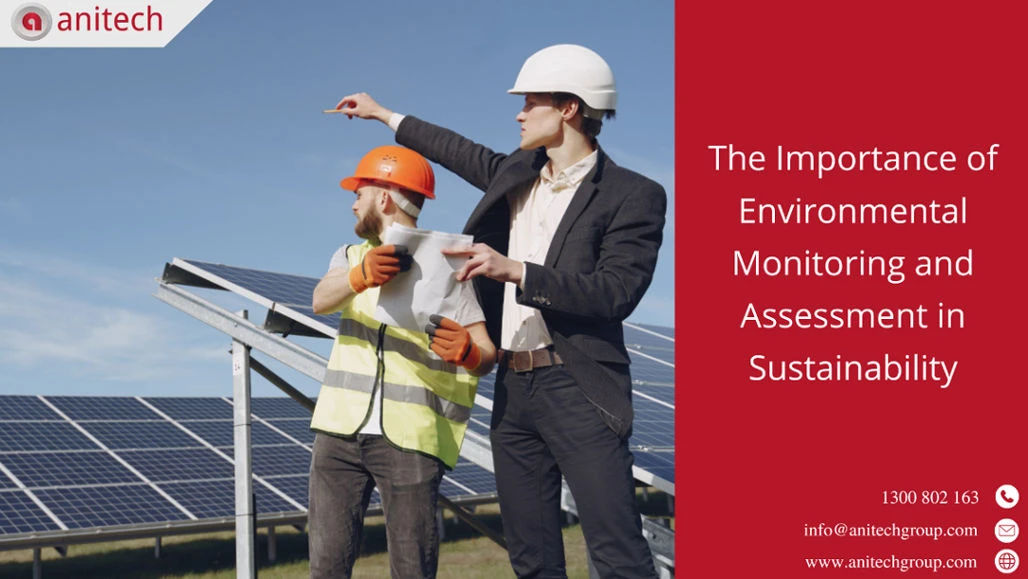
Environmental Monitoring and Assessment
Regular environmental monitoring and assessment can help organisations achieve sustainable goals. The trio of regular monitoring, evaluation, and reporting stands as a cornerstone of effective governance in contemporary public policy and regulation.
These practices serve as indispensable tools for:
1) Assessing Intervention Efficacy:
They provide the means to comprehensively understand whether interventions have succeeded or faltered in achieving their intended objectives.
2) Facilitating Continuous Improvement:
By pinpointing areas in need of enhancement and offering insights for adapting settings, they drive increased effectiveness and efficiency, fostering a culture of continuous improvement.
3) Ensuring Public Accountability:
The transparency afforded by robust monitoring and reporting mechanisms holds policymakers accountable to the public, ensuring their actions align with public interests and expectations.
Importance of Environmental Monitoring and Assessment for Sustainability
Effective monitoring, evaluation, and reporting of the Environmental Protection and Biodiversity Conservation (EPBC) Act, and the broader national environmental framework, is paramount for achieving superior environmental outcomes. Moreover, it forms the bedrock of trust in the environmental management systems.
When the outcomes of management interventions remain obscure to both the general community and the regulated sector, questions naturally arise, potentially eroding trust in the regulatory process.
The success of monitoring and evaluation is intrinsically tied to the management of information and data. It should underpin the design of monitoring activities that contribute valuable data to the national environmental information supply chain.
The efficacy of evaluations and the speed at which they yield insights hinge on the collection, collation, sharing, and in-depth analysis of information, emphasizing the role of data as the cornerstone of informed decision-making.
Acknowledging the inherent complexities in gauging the effectiveness of environmental policy and attributing observed outcomes to specific management actions, the Review does not advocate dismissing the importance of environmental monitoring and evaluation as an insurmountable challenge.
Inadequate Monitoring, Evaluation, and Reporting Under the EPBC Act
In October 2020, a key concern surfaced, shedding light on the inadequacies in monitoring, evaluation, and reporting within the framework of the Environmental Protection and Biodiversity Conservation (EPBC) Act. Several critical observations were made:
1) Inadequate Requirements:
While the EPBC Act does stipulate some monitoring and reporting requirements for activities and outcomes, these provisions do not comprehensively cover the Act’s operations. Unfortunately, a lack of follow-through and resource constraints often result in the focus being confined to meeting minimal reporting needs rather than leveraging monitoring and evaluation to drive adaptive improvements over time.
2) Limited Scope for Threatened Species:
Monitoring requirements for listed threatened species and ecological communities remain limited, offering scant visibility into progress. Although recovery plans are expected to detail monitoring methods, the Act does not mandate the implementation of such activities or require the reporting of achieved outcomes. Consequently, monitoring and reporting efforts are the exception rather than the norm.
3) Absence of Monitoring Details:
Conservation advice for threatened species and ecological communities lacks specifics on monitoring requirements. Additionally, mandated 5-year reviews of threat abatement plans often lag behind schedule or go unfulfilled.
4) Administrative Environmental Conditions:
The Environment Minister can attach conditions to approved developments under Part 9 of the EPBC Act, demanding specified environmental monitoring or testing along with report preparation. This, however, is an administrative decision, not a statutory requirement. Notably, the tracking of offsets, when they form a condition of approval, is not comprehensively conducted to assess their intended outcomes.
5) Lack of Framework for Strategic Assessments:
Strategic assessments conducted under Part 10 of the EPBC Act may include provisions for monitoring and evaluation but are not mandatory. The Department’s capacity to follow up on activities if not conducted is limited, and similar flexibility exists in bilateral agreements.
6) Underdeveloped Management Plans:
Parts of the EPBC Act necessitate the development of management plans and, in some cases, reports in adherence to these plans. However, these requirements currently fall short of best practice, with inconsistencies, inadequacies, and delays observed in the monitoring and evaluation of activities by other regulators under the Act.
7) Resource Constraints in Reporting:
All Commonwealth entities are obligated to report on ecologically sustainable development activities and outcomes in their annual reports. However, these reports primarily focus on operational aspects such as recycled paper usage or building energy efficiency, often neglecting the environmental impacts of policies and programs.
8) Non-Outcome-Oriented Reporting:
The Department’s annual report on the operation of the EPBC Act primarily highlights outputs and activities, while outcomes arising from the Act’s operation take a back seat. Additionally, the measures used for public reporting on the Act’s operation lack consistency and change from year to year, diminishing their usefulness.
Gaps in Monitoring and Evaluation with No Cohesive Framework
Monitoring and reporting activities under the EPBC Act exhibit inconsistency and gaps. The various monitoring and reporting requirements within the Act lack a clear overarching purpose.
1) Challenges in Defining Outcomes:
The broad policy areas of the EPBC Act, coupled with undefined outcomes sought by the Act, present challenges in monitoring and evaluating its effectiveness. Additionally, the Department lacks the necessary systems to collect data on its regulatory activities, making it difficult to assess resource allocation and activity efficiency.
2) Lack of Coordination:
Monitoring, evaluation, review, and reporting activities related to the EPBC Act lack cohesion and alignment. Each party involved in the Act’s implementation reports on their activities differently, with varying levels of detail regarding outcomes. Inconsistencies in monitoring and evaluation hinder effective assessment, leading to inefficient resource allocation and a dearth of lessons learned.
3) Limited Long-Term Monitoring:
The Act’s limited focus on long-term monitoring impedes the understanding of cumulative impacts at the national level. There is no cohesive framework to link activities to shorter-term outcomes or to test assumptions about whether activities will lead to intended outcomes.
4) Inadequate Resources for Monitoring:
Inadequate long-term monitoring means that poor performance is not detected in a timely manner. Opportunities for tweaking management approaches are often reserved for major reviews, resulting in delayed improvements.
5) Lack of Data-Driven Insights:
The absence of a data-driven, contemporary, and authoritative source of information to assess the Act’s performance highlights a significant failure in monitoring, evaluation, and reporting.
Fragmentation in Monitoring and Evaluation of Australia’s Environmental Management System
a) The Inherent Complexity of Environmental Management:
1) Australia’s environmental management system involves multiple stakeholders, including government bodies, states, territories, and the private sector, all with varying responsibilities and methods.
2) The complexity of the environment, coupled with natural variability and extended timeframes, makes it challenging to link human interventions to observed changes.
3) Accountability is often unclear, and the environment continues to decline as a result of this shared responsibility.
b) Inconsistent and Isolated Monitoring and Reporting:
1) Existing monitoring and reporting efforts at national and international levels lack a cohesive mechanism to provide a comprehensive view of Australia’s environmental management performance.
2) Strategies evolve over time, influenced by changing priorities, which leads to inconsistent reporting and frequent data duplication.
3) Recent initiatives aim to align environmental reporting across international, national, and sub-national levels, but integration remains limited.
4) The absence of a centralized information base and long-term monitoring impedes the evaluation of environmental management effectiveness.
c) Unclear Purpose of National State of the Environment Reporting:
1) The national State of the Environment (SoE) report, prepared every 5 years as required by the EPBC Act, aims to depict Australia’s environmental status.
2) Despite recent improvements, each SoE report is an amalgamation of insights from diverse sources, and it does not establish consistent data series.
3) The purpose and objectives of the SoE report remain unclear, and it lacks a framework that ensures long-term consistency.
4) The SoE report offers limited insight into the effectiveness of environmental activities, and its timing does not align with the primary mechanism for adaptive management, the decadal review process.
Reforms for Enhanced Monitoring and Evaluation of Australia’s Environmental Management System
a) A Framework for Broader Environmental Outcomes Reporting:
1) Currently, assessing the environmental performance of the EPBC Act and management activities at different government levels is challenging.
2) A consistent and collaborative national-level reporting approach is needed for enhanced quality and communication of environmental management activities.
3) A comprehensive monitoring and evaluation framework should be established to understand the national environmental management system’s performance, with the EPBC Act framework nested within it.
4) This framework should feature long-term environmental indicators, offering consistent, repeatable analysis and attribution of outcomes to different management levers.
b) Overhauling National State of the Environment Reporting:
1) The national SoE report should undergo a transformation to be the cornerstone of Australian environmental reporting, providing consistent and clear insights into environmental changes.
2) The report should continue to be independently prepared to maintain objectivity and independence.
3) It should focus on agreed national indicators, support an annual evaluation of the EPBC Act National Environmental Standards, align with environmental-economic accounts, and adhere to international reporting requirements.
4) A nationally agreed evaluation framework should structure the report, offering flexibility for addressing new issues.
c) Accelerated Efforts on National Environmental-Economic Accounts:
1) Environmental-economic accounting (EEA) should be integrated to establish consistent Environmental Sustainable Development (ESD) reporting across governments.
2) EEA development should be expedited to be integrated into public policy.
3) The EEA can support the EPBC Act implementation and recommended reforms by offering a consistent structure for assessing natural asset value, predicting future changes, and supporting decision-making based on natural capital metrics.
4) National EEAs should be tabled in parallel with budget reporting, ensuring visibility and mainstreaming the environmental impact of actions.
RECOMMENDATION 35:
The Commonwealth should promptly commit to delivering a published response to the 2021 State of the Environment report, outlining a strategic national plan for the environment with annual reporting on its implementation.
RECOMMENDATION 36:
In the second phase of reform, the EPBC Act should be amended to provide a strong legislative basis for the Commonwealth’s national leadership and reporting role. This includes setting out the SoE report’s purpose, ensuring its independence, and requiring government responses in the form of a national plan for the environment and annual reports.
RECOMMENDATION 37:
As part of the third phase of reform, the Commonwealth should work collaboratively with States and Territories to streamline national and international reporting. This includes establishing a national environmental monitoring and evaluation framework and nationally agreed environmental-economic accounts for streamlined reporting. These accounts should be continuously improved over time.
Anitech’s experienced consultants can help organisations understand the legal implications of a lack of environmental monitoring and assessment and suggest strategies to overcome gaps.
Our audits can help organisations in overcoming challenges stopping them from achieving sustainable goals.
Call us today at 1300 802 163 or e-mail – sales@anitechgroup.com.


Recent Comments