
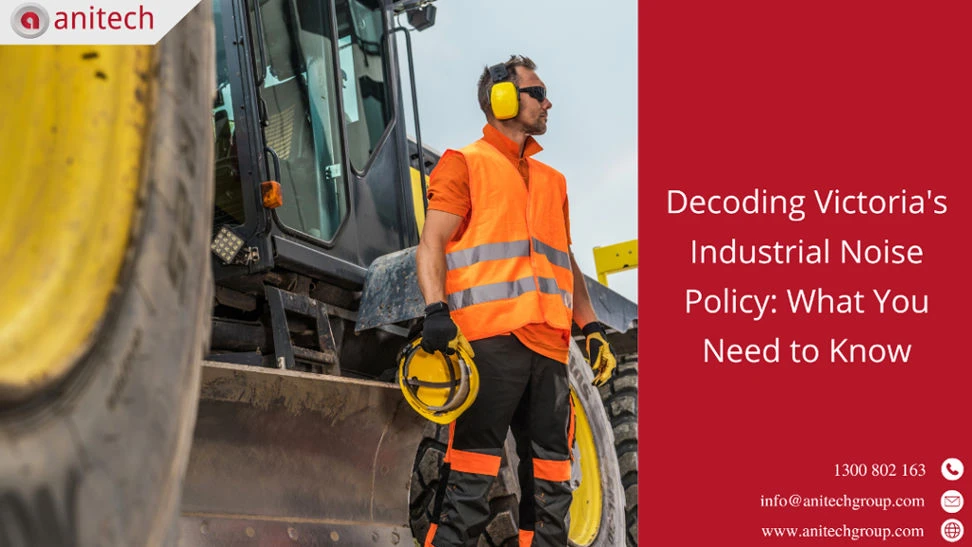
In Victoria, Australia, businesses are required to adhere to strict environmental policies, including noise pollution regulations, as part of their responsibility to mitigate harm to human health and the environment.
In compliance with this duty, businesses are prohibited from generating unreasonable or aggravated noise. It is incumbent upon them to ensure that noise emissions stemming from their operations or premises do not unduly disrupt the local community. This responsibility extends to any contractors or tradespeople engaged by the business.
In this blog, we have captured the active Noise policy in Victoria, Australia, helping businesses understand their obligations and ensure compliance.
Noise – Definitions by Environment Protection Regulations 2021
The Environment Protection Regulations (EPR) 2021 (the Regulations) meticulously define what constitutes unreasonable and aggravated noise in specific categories:
1) Residences
2) Entertainment venues
3) Commercial, industrial, and trade premises
Additionally, the Regulations provide explicit standards and methodologies for evaluating motor vehicle air and noise emissions. These regulations aim to ensure clarity and compliance within these defined sectors.
Elements of Noise Legislation in Victoria
Under the Environment Protection Act 2017, there are three key areas that form the foundation of noise legislation in Victoria, each with specific obligations:
1) General Environmental Duty:
The General Environmental Duty imposes a responsibility on entities to minimise the risk of harm to human health and the environment arising from pollution and waste, which includes noise and vibrations. If your activities involve noise, it is your duty to reduce the associated risks reasonably and practicably.
2) Unreasonable Noise:
It is strictly prohibited to emit noise that is deemed unreasonable from any location or premises. Determining the reasonableness of noise takes into account various factors, including the volume, intensity, duration, character, timing, and location of the noise. Additionally, prescribed factors such as low-frequency noise from industrial sources are considered.
Specific requirements pertaining to noise emissions apply to various types of premises:
- Residential Premises
- Entertainment Venues
- Commercial, Industrial, and Trade Premises
3) Aggravated Noise:
Emitting aggravated noise constitutes an offence, particularly for commercial, industrial, and trade premises, as well as entertainment venues. Aggravated noise refers to noise emissions that significantly surpass the noise limits established for unreasonable noise.
Compliance with these noise regulations is crucial to ensure that your operations are in line with the law and do not pose a threat to human health or the environment.
EPA’s ‘Applying the Noise Framework’ Guidance Series
The EPA has released an extensive guidance series designed for both businesses and the community. This series delves into the application of the environmental protection framework, including relevant laws and regulations, to the realm of noise. It encompasses various aspects, such as the regulation of distinct noise sources (e.g., music noise versus industrial noise), methods for noise assessment (utilising qualitative ‘common sense’ evaluations and quantitative technical measurements), and the intricate interplay between different environmental protection laws (specifically, the general environmental duty and the duty not to emit unreasonable noise).
Furthermore, the series features practical examples illustrating compliance with these laws and regulations. It’s important to note that the series excludes coverage of residential noise regulation under the Environment Protection Act 2017. For information on this topic, please refer to our Residential noise guidelines.
This comprehensive guidance series is divided into four distinct parts for the convenience of the users.
Unreasonable Noise Guidelines
These guidelines provide a detailed overview of unreasonable noise, offering insights into the methods for assessing its reasonability, and how these align with the general environmental duty. Additionally, the document incorporates real-world case studies exemplifying the compliance, enforcement, and resolution processes related to noise pollution incidents.
Industry, Commerce, and Trade Noise Guidelines
These guidelines provide a thorough explanation of how the Environment Protection Act 2017 (section 25, section 166, and section 168) and the Environment Protection Regulations 2021 (Part 5.3, Division 3) are applicable to noise emissions originating from commercial, industrial, and trade premises.
Compliance with Noise Limits
As per the Environment Protection Regulations 2021 (Part 5.3, Division 3), noise originating from commercial, industrial, and trade premises is considered unreasonable when it surpasses the specified noise limits.
To gauge compliance with these noise limits, we employ the Noise Limit and Assessment Protocol designed for managing noise emanating from commercial, industrial, and trade premises, as well as entertainment venues (Publication 1826), also known as the Noise Protocol.
It is crucial to emphasise that aggravated noise constitutes a grave offence, and it entails the imposition of substantial penalties. In the context of commercial, industrial, and trade premises, noise is deemed aggravated if it exceeds the noise limit by a specific margin.
The EPA employs its remedial authority to address potential risks to human health, the environment, and instances of unreasonable noise, such as a business exceeding prescribed noise limits. These remedial powers encompass the issuance of statutory remedial notices, which may require:
Actions taken by EPA to Control Noise from Businesses
- Undertaking necessary actions to achieve compliance.
- Cessation of specific activities.
- Conducting comprehensive investigations as deemed essential.
Entertainment Venues and Outdoor Entertainment Events Music Noise Guidelines
These guidelines offer a comprehensive elucidation of the application of the Environment Protection Act 2017 (section 25, section 166, and section 168) and the Environment Protection Regulations 2021 (Part 5.3, Division 4) to noise emissions stemming from entertainment venues and outdoor entertainment events.
Permit Guidelines for Outdoor Entertainment Venues and Events
These guidelines provide comprehensive insights into the permitting prerequisites applicable to individuals and businesses intending to organise musical entertainment at outdoor venues or events.
Steps to Assist Businesses Craft a Robust Noise Policy in Victoria
Crafting a Noise Policy for your business in Victoria, Australia involves several crucial steps to ensure compliance with local regulations and minimise the impact of noise pollution on the community and the environment. Here’s a streamlined guide to developing your Noise Policy:
1) Understand Regulatory Framework:
- Start by thoroughly grasping the noise-related laws and regulations in Victoria, particularly the Environment Protection Act 2017 and the Environment Protection Regulations 2021.
- Familiarise yourself with specific noise limits and requirements applicable to your industry and location.
2) Identify Key Stakeholders:
- Determine the key stakeholders within and outside your organisation who will be affected by the Noise Policy. This includes employees, management, local communities, regulatory authorities, and environmental organisations.
3) Conduct a Noise Assessment:
- Perform a comprehensive assessment of noise emissions from your business operations.
- Identify noise sources, assess their impact on the surroundings, and establish baseline noise levels. Consider hiring an acoustical consultant if needed.
4) Set Clear Objectives:
- Define the objectives of your Noise Policy, such as compliance with noise regulations, minimising noise emissions, enhancing community relations, and environmental protection.
5) Establish Noise Mitigation Measures:
- Develop practical noise mitigation measures tailored to your business, such as noise barriers, quieter equipment, scheduling noisy activities during permitted hours, and regular maintenance.
6) Create Noise Monitoring Protocols:
- Establish procedures for ongoing noise monitoring and compliance checks.
- Determine the frequency, monitoring locations, and equipment/technology to be used in line with regulatory requirements.
7) Communication and Training:
- Communicate the Noise Policy and mitigation measures to all employees.
- Provide training to ensure everyone understands their roles and responsibilities in noise control.
8) Community Engagement:
- Engage with the local community to address concerns, share information about noise management efforts, and establish effective communication channels for reporting noise-related issues.
9) Documentation and Records:
- Maintain detailed records of noise assessments, monitoring results, complaints, mitigation actions, and compliance reports.
- Proper documentation showcases your commitment to noise control and aids in regulatory audits.
10) Review and Continuous Improvement:
- Periodically review your Noise Policy and noise control measures to identify areas for enhancement.
- Stay updated with changes in regulations, technologies, and best practices related to noise management.
11) Reporting and Compliance:
- Promptly report any noise limit breaches to relevant authorities and take corrective actions as stipulated by regulations.
12) Policy Implementation:
- Ensure consistent implementation of your Noise Policy across your organisation.
- Appoint responsible individuals or teams to oversee noise management.
13) Seek Legal and Expert Advice:
- Consider consulting legal counsel and noise experts to align your Noise Policy with the law and industry standards.
14) Publicise and Promote:
- Communicate your Noise Policy to all stakeholders and make it easily accessible.
- Promote your commitment to noise control through public relations efforts.
15) Periodic Review and Updates:
- Schedule regular reviews of your Noise Policy to incorporate changes in regulations or technologies.
- Ensure your policy remains effective and relevant.
By following these streamlined steps, organisations can create a comprehensive Noise Policy tailored to their business operations in Victoria, Australia.
Anitech’s occupational hygienist can help you further.
Do call us at 1300 802 163 or e-mail – sales@anitechgroup.com.
For more information, stay tuned to our website.


Recent Comments